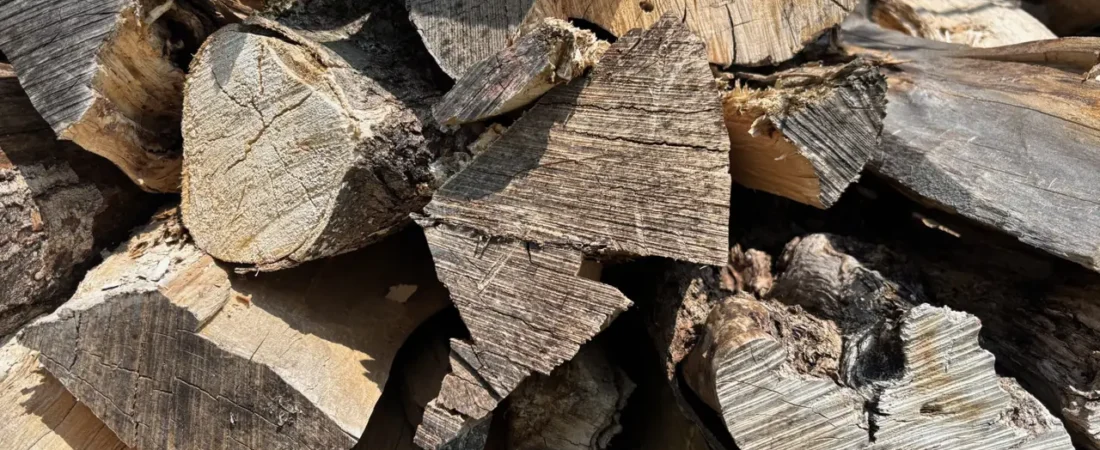
Freshly cut, or green, wood contains a lot of water. Burning it wastes heat on boiling off that water and produces more smoke. That is why firewood is dried before it is sold, either in the open air or in a kiln.
Seasoned firewood
Seasoned wood is split and stacked so air and sun can dry it over time. Drying for at least six months is a common recommendation, and dense hardwoods such as oak often take longer. How dry it gets depends on the climate, the species and how it is stacked.
Kiln-dried firewood
Kiln-dried wood is dried with heat in an enclosed kiln, which reduces moisture much faster than air drying. It is common for boxed and bundled firewood and for cooking wood. Some kiln processes also meet heat-treatment standards used for moving firewood, but that depends on the specific process and certification.
Which should you choose?
- Heating all winter: seasoned hardwood by the cord is the usual choice.
- Occasional fires, apartments or quick lighting: kiln-dried boxes and bundles are convenient.
- Cooking: kiln-dried cooking splits give consistent, clean results.
What matters most: dryness
Whatever the method, burn dry wood. The EPA recommends a moisture content of 20% or less. A moisture meter, used on the fresh face of a newly split piece, gives a quick check. Dry wood tends to have cracked ends, feels lighter and makes a hollow sound when two pieces are knocked together.
Browse seasoned hardwood or kiln-dried firewood.
Sources: EPA Burn Wise: Choosing the right wood.